



Every day in Slovenian kindergartens, primary and secondary schools, more than 200,000 meals are prepared, distributed and consumed. These meals are not just a logistical achievement of the system, but an important public health measure. For many children, they represent a significant portion of their daily food intake, often the most balanced meal of the day.
At a time when children's dietary habits are increasingly shaped by aggressive marketing of highly processed foods, widespread availability of energy-dense and nutrient-poor food, and the influence of the food industry, organized nutrition in educational institutions has become one of the key spaces for developing balanced habits [1]. However, those who oversee this system daily remain almost invisible.
Nutrition coordinators in educational institutions are crucial for ensuring nutritional quality, food safety, and increasingly, sustainable practices. Their decisions directly affect what our children eat, how often they consume certain foods, and what relationship with food they develop. In practice, however, their work is often not adequately recognized or systematically supported.
When Theory Meets Practice
Long-standing experience in organizing nutrition in educational institutions clearly shows how important this role is and, at the same time, how often it remains undervalued. Not only at the state level, but also within institutions, where it should have clear professional weight.
If we want to understand why organizing nutrition in educational institutions is challenging, we must start from a simple fact: a menu on paper means nothing if it is not executed with quality in practice.
And execution is the most demanding part of the process.
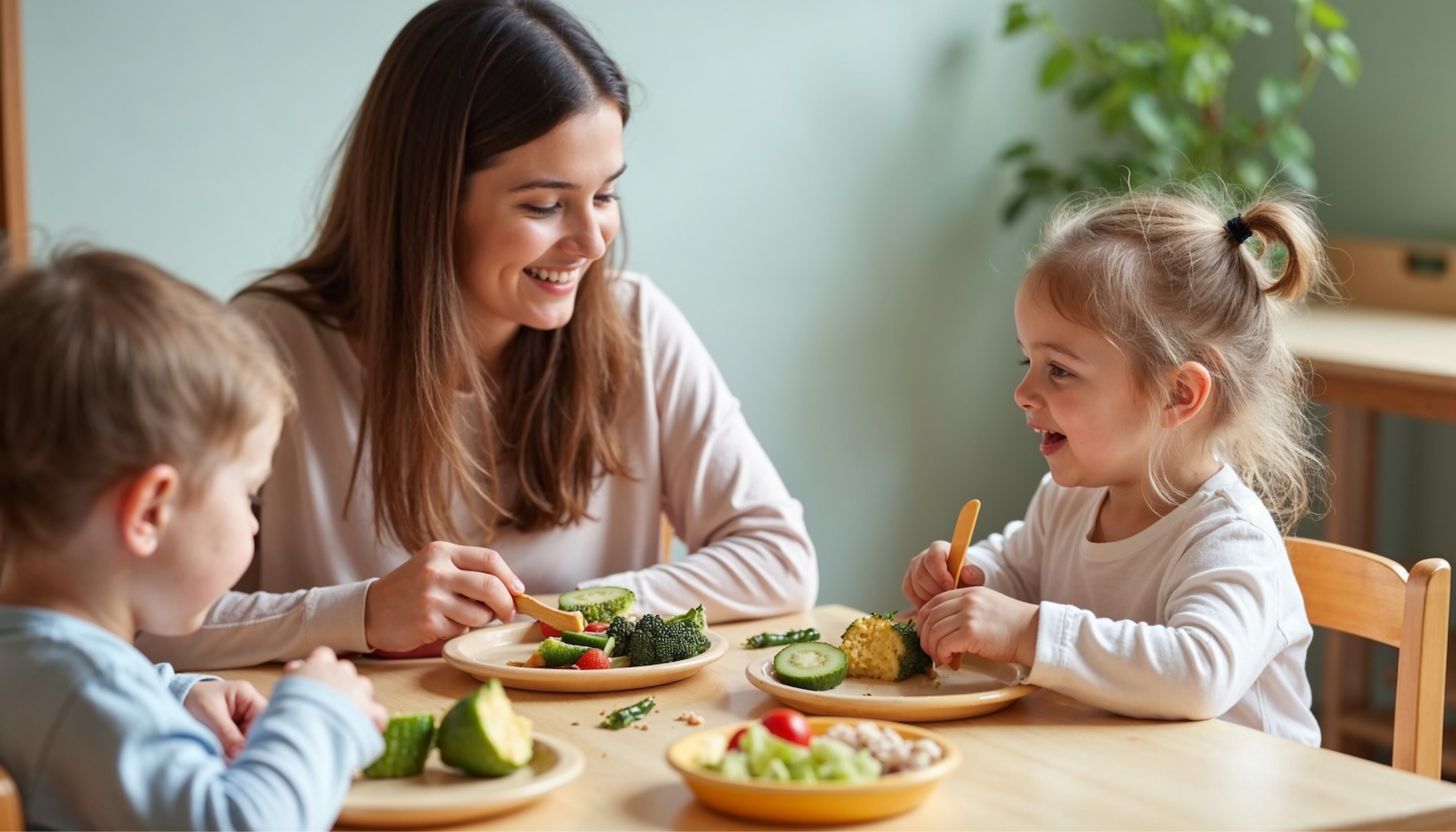
A nutrition coordinator alone cannot significantly improve children's dietary habits. Their work necessarily depends on cooperation with all stakeholders in the institution. First among them are educational staff, who are in daily direct contact with children. Their example carries exceptional weight, especially in kindergartens, but remains important in primary and secondary schools as well.
Research consistently shows that a significant proportion of children do not meet recommendations for fruit and vegetable consumption and regular meals, while often reaching for energy-dense, nutrient-poor foods [2]. This means that every contact a child has with balanced nutrition and every example and encouragement from an adult has an important role.
If an educational worker understands their influence, they can achieve a lot with simple but consistent approaches: they encourage tasting, strengthen positive attitudes toward food, and reduce resistance to unfamiliar foods. Research shows that social environment, adult role modeling, and the way food is offered play a crucial role in shaping children's dietary habits [3].
This requires clear role division. The nutrition coordinator must systematically include less popular dishes in menus, while the professional staff must create conditions through consistent and positive encouragement where children will be willing to try them. This approach is also confirmed by research data showing that children do eat diverse nutrition that is regularly offered in a supportive environment [4].
Only with such a coordinated approach is it possible to achieve that most children gradually accept most meals.
School Kitchen: Where Healthy Nutrition Is Realized or Nullified

The second key link in the system is the kitchen. Kitchen staff determine in practice whether a child will receive a nutritionally quality meal or just a formally executed menu.
The method of food preparation is not a technical detail, but a decisive factor in meal quality. The kitchen makes daily decisions that directly affect the nutritional profile of dishes: whether food is prepared from basic ingredients or semi-prepared products, how much salt the dishes contain, whether whole grain or refined ingredients are used, and how much sugar is added to desserts prepared in the kitchen.
The differences are not negligible. Food prepared from basic raw materials, taking into account limitations on sugar, salt, and fat use, typically has significantly better nutritional composition. But this requires knowledge, time, and support.
The consequences of inadequate food preparation are visible very quickly. If a child tries a poorly prepared dish – for example, overcooked buckwheat porridge, overcooked pasta, or pumpkin soup made from bitter pumpkin – they will not only reject it, but their willingness to try it again will also decrease. Not only is one meal lost, but also the opportunity for learning and accepting new, balanced dishes [3].
Therefore, the work of a nutrition coordinator does not only include menu planning. An important part of their role is also constant professional guidance of kitchen staff, checking recipes, and raising awareness about the importance of quality food preparation.
But this requires time, professional presence, and appropriate organizational conditions.
The Principal's Role: The Decisive Factor in Educational Institution Nutrition Systems
If we had to highlight one single factor that determines the quality of nutrition in an educational institution in practice, it is the role of the principal.
Nutrition in educational institutions is not an isolated subsystem. It is part of organizational culture, priorities, and management decisions. The principal directly determines through their decisions whether nutrition will be treated as a logistical necessity or as an important educational and public health element.
This is not reflected in declarative guidelines, but in concrete decisions:
- how much professional autonomy the nutrition coordinator has,
- whether nutrition is included in the institution's annual work plan,
- whether educational staff are systematically guided to support nutritional goals,
- and whether conditions for quality meal preparation are ensured.
In an environment where nutrition goals are clearly defined, roles are coordinated, and responsibility is shared, a nutrition coordinator can perform their work professionally, systematically, and with actual effects in practice, not just at the planning level.
The Myth of Public Procurement in Public Institutions
One of the most persistent myths in the school nutrition system is that public procurement prevents the purchase of quality food. This is not true.
Public procurement can be an extremely effective mechanism for ensuring quality food at affordable prices, often more favorable than in the free market. What is decisive is how technical specifications, selection criteria, and food quality requirements are formulated in the public procurement process. This is also confirmed by legislation, as the Public Procurement Act (ZJN-3) [5] in Article 84 enables selection based on the most economically advantageous offer, which includes quality and other professional criteria in addition to price.

The nutrition coordinator has a central professional role in this. They formulate specifications, determine criteria, and collaborate with suppliers. That's why it's essential that they act professionally, decisively, and without compromising on quality.
The quality of food in educational institutions is therefore not limited by legislation, but by how it is applied in practice.
An Invisible Role with Visible Consequences
Experience from practice clearly shows that implementing balanced nutrition in educational institutions is not simple. There are many reasons why it's challenging. But there are just as many reasons why it's necessary.
If we want children to truly develop sustainable and healthy dietary habits, the nutrition coordinator must lead with a clear and professionally grounded position: balanced nutrition is the rule, not a choice.
Therefore, the responsibility of all of us who co-create nutrition in educational institutions is concrete and measurable. A professionally planned menu is the foundation, but its true value is only shown in consistent implementation and in how many children actually eat a quality meal.
For professional support in implementing changes, upgrading the system, or transferring practically proven approaches in the field of balanced nutrition, I am available at
References
1. Fernandez-Jimenez, R., et al., Children Present a Window of Opportunity for Promoting Health. Journal of the American College of Cardiology, 2018. 72(25): p. 3310-3319.
2. Jeriček Klanšček H., in sod., Z zdravjem povezana vedenja v šolskem obdobju med mladostniki v Sloveniji. 2023, NIJZ: https://nijz.si/wp-content/uploads/2023/10/HBSC_e_verzija_pop_2023-2.pdf.
3. Scaglioni, S., et al., Factors Influencing Children's Eating Behaviours. Nutrients, 2018. 10(6).
4. Berlic, M., T. Battelino, and M.J.N. Korošec, Can Kindergarten Meals Improve the Daily Intake of Vegetables, Whole Grains, and Nuts among Preschool Children? A Randomized Controlled Evaluation. Nutrients, 2023. 15(18): p. 4088.
5. Zakon o javnem naročanju (ZJN-3), Ur.l.RS št. 91/15; 14/18; 121/21; 10/22; 74/22